Implementation Guides
Detailed step-by-step instructions for volunteers and club administrators
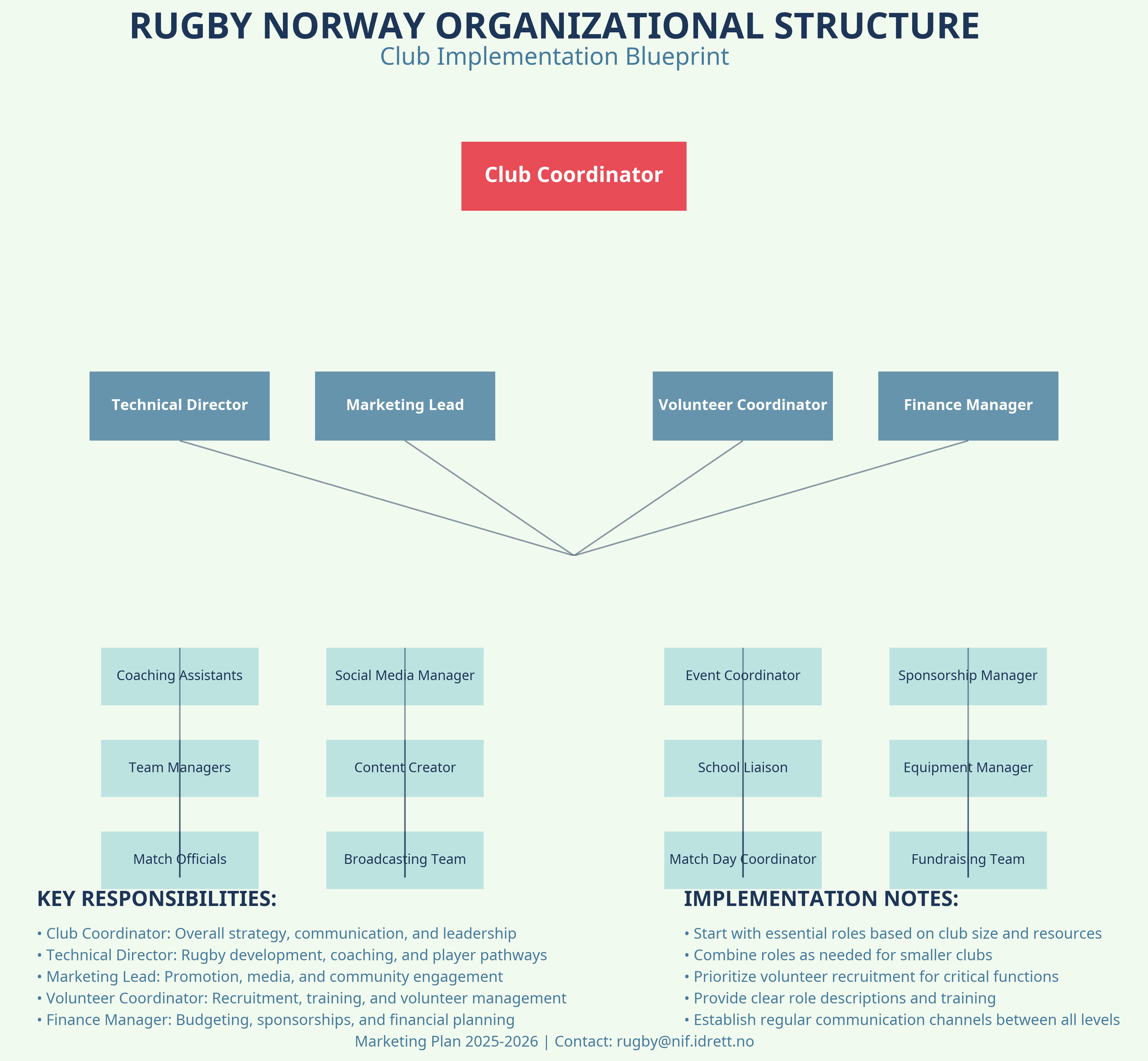
Club Structure and Roles
This comprehensive blueprint provides detailed guidance for rugby clubs in Norway to implement the strategic marketing plan. It is designed for volunteers and non-professionals, with step-by-step instructions for all key activities.
Core Leadership Team
Volunteer Roles
Implementation Steps
- Conduct club audit to assess current status, resources, and capabilities
- Identify priority roles based on club size and resources
- Recruit volunteers for essential positions through targeted outreach
- Provide role-specific training using the implementation guides
- Establish regular communication channels for coordination and feedback
- Implement monthly review process to track progress and adjust as needed
Introduction to Rugby Program
The Rugby 101 Program is designed to introduce rugby to newcomers in a fun, safe, and engaging way. This comprehensive guide provides everything needed to run successful introductory sessions for various age groups and ability levels.
Program Objectives
- Introduce rugby fundamentals to new players
- Create a positive first experience with the sport
- Build confidence through progressive skill development
- Emphasize rugby's core values and culture
- Convert participants into regular players
Target Audiences
- Children (ages 6-12)
- Teenagers (ages 13-18)
- Adults with no prior rugby experience
- Women and girls specific sessions
- Corporate/team building groups
Session Structure
Each Rugby 101 session follows a consistent format designed to maximize engagement and learning:
Welcome & Introduction (10 minutes)
Brief overview of rugby, safety guidelines, and session goals. Include a simple ice-breaker activity to build comfort.
Warm-Up Games (15 minutes)
Fun, rugby-related games that develop fundamental movement skills while preparing participants physically.
Skill Development (30 minutes)
Progressive introduction to core rugby skills: passing, catching, running with the ball, and basic positional play.
Modified Game (20 minutes)
Touch or tag rugby game with simplified rules to apply skills in a game context while maintaining safety.
Cool Down & Reflection (15 minutes)
Light stretching, session review, and information about next steps for continued participation.
Implementation Guide
- Prepare Resources
- Rugby balls (size appropriate for age group)
- Cones and markers
- Tag belts (for non-contact sessions)
- Printed handouts about rugby basics
- Club information and registration forms
- Venue Selection
- Safe, accessible location
- Adequate space for running activities
- Indoor option for poor weather
- Changing facilities if possible
- Promotion Strategy
- Social media announcements
- School partnerships
- Local community boards
- Existing member referrals
- Coach Preparation
- Minimum 2 coaches per session
- Review session plan in advance
- Prepare age-appropriate explanations
- Focus on positive reinforcement
- Follow-Up Process
- Collect participant contact information
- Send thank you message with next session details
- Offer special discount for first-time registration
- Create WhatsApp/Facebook group for participants
Sample Skill Drills
Pass and Move
Setup: Players in groups of 4-6 in a circle.
Execution: Pass ball around circle, focusing on proper grip and follow-through. After passing, player moves to a new position.
Progression: Add second ball, change direction, increase distance.
Tag Evasion
Setup: 10x10m grid with 3-4 taggers and remaining players as runners with balls.
Execution: Runners carry ball and evade taggers. When tagged, perform 5 passes before rejoining.
Progression: Reduce grid size, add more taggers, require specific footwork.
Channel Running
Setup: Create 2m wide channel with cones, 15m long.
Execution: Players run through channel carrying ball correctly, focusing on ball position and running form.
Progression: Add defenders, require change of pace, add passing element at end.
Success Metrics
Track the following metrics to evaluate program effectiveness:
- Number of participants per session
- Retention rate (returning for multiple sessions)
- Conversion rate to club membership
- Participant satisfaction (via simple survey)
- Social media engagement from program content
Rugby Norway Podcast Production Guide
This comprehensive guide provides step-by-step instructions for creating and maintaining a high-quality rugby podcast to increase engagement, share rugby knowledge, and build community in Norway.
Podcast Objectives
- Increase rugby awareness in Norway
- Showcase local rugby stories and personalities
- Provide educational content for new players and fans
- Create regular touchpoints with the rugby community
- Support the overall marketing strategy
Target Audience
- Current rugby players in Norway
- Potential players interested in the sport
- Rugby coaches and administrators
- Parents of youth players
- General sports enthusiasts
Equipment Needs
Basic equipment required for quality podcast production:
Essential Equipment
- Microphones: USB microphones like Blue Yeti (approx. 1200 NOK) or XLR microphones with audio interface for better quality
- Headphones: Closed-back headphones to monitor audio (600-1000 NOK)
- Computer: Any modern laptop or desktop with sufficient processing power
- Recording Software: Audacity (free), GarageBand (free for Mac), or Zencastr (online)
- Quiet Recording Space: Room with minimal echo and background noise
Optional Upgrades
- Portable Recorder: Zoom H4n or similar for field interviews (1500-2000 NOK)
- Pop Filters: To reduce plosive sounds (100-200 NOK)
- Microphone Stands/Boom Arms: For better positioning (300-500 NOK)
- Acoustic Treatment: Foam panels or blankets to improve sound quality
- Editing Software: Adobe Audition or Hindenburg for advanced editing
Podcast Format
Recommended format for the Rugby Norway podcast:
- Episode Length: 30-45 minutes (optimal for commute listening)
- Release Schedule: Bi-weekly to start, potentially weekly during season
- Format: Host + co-host with regular guest interviews
- Language: Primary in Norwegian with occasional English episodes for international guests
- Structure: Intro (2 min) → News Roundup (5-7 min) → Main Topic/Interview (15-20 min) → Community Segment (5 min) → Upcoming Events (3 min) → Outro (2 min)
Content Planning
Suggested content themes and episode ideas:
Player Spotlights
- Interviews with national team players
- Rising stars in Norwegian rugby
- Player journeys and experiences
- International players in Norwegian clubs
Rugby Education
- Rules explanations for newcomers
- Tactical discussions and analysis
- Training tips and techniques
- Rugby positions and roles explained
Club Features
- History and development of local clubs
- Club initiatives and community work
- Behind-the-scenes at tournaments
- Club challenges and success stories
Rugby Culture
- Rugby traditions and values
- International rugby events and their impact
- Rugby's growth in non-traditional markets
- Women's rugby development
Production Process
1. Pre-Production
- Develop episode concept and outline
- Research topic thoroughly
- Prepare question list for interviews
- Schedule guests and confirm availability
- Test all equipment before recording
2. Recording
- Ensure quiet recording environment
- Position microphones correctly (10-15cm from mouth)
- Record 10 seconds of room tone before starting
- Monitor audio levels during recording
- Save recordings in multiple locations
3. Editing
- Remove unwanted sections and mistakes
- Balance audio levels between speakers
- Add intro and outro music
- Insert sponsor messages if applicable
- Export as MP3 (192kbps minimum)
4. Publishing
- Create compelling episode title and description
- Design consistent episode artwork
- Upload to hosting platform (Anchor, Libsyn, etc.)
- Distribute to major platforms (Spotify, Apple Podcasts, etc.)
- Schedule social media promotion
Promotion Strategy
Effective ways to promote the podcast:
Social Media
- Create audiograms (audio clips with waveform visuals)
- Share episode quotes as graphics
- Post behind-the-scenes content
- Create episode-specific hashtags
Website Integration
- Dedicated podcast page on Rugby Norway website
- Episode show notes with timestamps
- Embedded player for easy listening
- Transcripts for accessibility
Cross-Promotion
- Collaborate with other sports podcasts
- Promote at rugby matches and events
- Encourage guests to share their episodes
- Partner with rugby clubs for promotion
Community Engagement
- Answer listener questions on air
- Create listener polls for topic ideas
- Host occasional live recording sessions
- Recognize and thank regular listeners
Success Metrics
Key performance indicators to track:
- Download/stream numbers per episode
- Listener retention (how much of each episode is typically consumed)
- Subscription growth rate
- Social media engagement with podcast content
- Website traffic from podcast referrals
- Qualitative feedback from listeners
Rugby Norway Website Development Guide
This comprehensive guide provides step-by-step instructions for improving and maintaining the Rugby Norway website to better serve the community, attract new players, and support the overall marketing strategy.
Website Objectives
- Serve as the central information hub for rugby in Norway
- Attract and convert new players and fans
- Showcase Norwegian rugby activities and achievements
- Provide resources for clubs, players, and coaches
- Support the broadcasting and media strategy
Target Audiences
- Potential new players seeking information
- Current players looking for resources
- Parents researching rugby for their children
- Coaches and administrators
- Media and potential sponsors
Current Website Assessment
Based on the review of the current Rugby Norway website (rugby.no), the following areas need improvement:
Design & User Experience
- Outdated visual design needs modernization
- Limited mobile responsiveness
- Navigation structure needs simplification
- Inconsistent branding elements
- Slow page loading times
Content
- Limited content for newcomers to the sport
- Outdated information in several sections
- Insufficient visual content (photos, videos)
- Lack of engaging stories and player profiles
- Limited resources for clubs and coaches
Functionality
- No integrated match streaming capability
- Limited calendar and event management
- Basic contact forms without follow-up system
- No club finder functionality
- Limited integration with social media
Technical
- Outdated content management system
- Poor search engine optimization
- Limited analytics implementation
- Security vulnerabilities
- No regular backup system
Recommended Improvements
Phase 1: Essential Updates (1-2 months)
Design Refresh
- Implement responsive design framework
- Update color scheme and typography
- Redesign homepage with clear calls-to-action
- Optimize for mobile devices
- Improve navigation structure
Content Updates
- Create "New to Rugby" section
- Update club directory with accurate information
- Develop comprehensive events calendar
- Add player profiles and success stories
- Create resources section for clubs
Technical Improvements
- Update CMS to latest version
- Implement basic SEO improvements
- Set up Google Analytics
- Improve page loading speed
- Implement regular backup system
Phase 2: Enhanced Functionality (3-6 months)
Media Integration
- Implement video streaming platform
- Create match highlights section
- Develop photo gallery system
- Integrate podcast player
- Create media resource center
Interactive Features
- Develop interactive club finder map
- Create competition tables and results system
- Implement member registration forms
- Add community forum functionality
- Create newsletter subscription system
Advanced Content
- Develop coaching resources section
- Create rules and regulations library
- Implement multilingual support
- Develop sponsor showcase section
- Create national team profiles
Implementation Guide
- Planning & Requirements
- Document detailed requirements for each phase
- Create sitemap and user flow diagrams
- Develop content inventory and plan
- Identify technical requirements and hosting needs
- Establish project timeline and milestones
- Design & Development
- Create wireframes for key pages
- Develop visual design mockups
- Set up development environment
- Implement responsive templates
- Develop custom functionality as needed
- Content Creation
- Audit existing content for reuse
- Create content calendar for new materials
- Develop core pages and sections
- Optimize all content for SEO
- Create visual assets (photos, graphics)
- Testing & Launch
- Conduct thorough cross-browser testing
- Perform mobile responsiveness testing
- Check all forms and interactive elements
- Verify analytics implementation
- Develop launch plan and announcement
- Maintenance & Growth
- Establish content update schedule
- Implement regular technical maintenance
- Monitor analytics and user behavior
- Gather user feedback for improvements
- Plan for Phase 2 implementation
Technical Recommendations
Recommended Platforms
- Content Management System: WordPress (user-friendly, extensive plugins)
- Hosting: Managed WordPress hosting with Norwegian data centers
- Video Platform: YouTube integration with embedded player
- Forms: Gravity Forms or WPForms
- Calendar: The Events Calendar plugin
Development Resources
- Theme: Customized responsive theme (Astra or GeneratePress)
- Page Builder: Elementor Pro for easy content management
- SEO: Yoast SEO or Rank Math
- Security: Wordfence or Sucuri
- Backup: UpdraftPlus or BackupBuddy
Resource Requirements
Budget Estimate
- Hosting: 1,500-3,000 NOK/year
- Domain: 150-300 NOK/year
- Premium Theme: 500-1,500 NOK
- Essential Plugins: 2,000-5,000 NOK/year
- Development Support: 10,000-30,000 NOK (depending on volunteer vs. professional)
Team Requirements
- Website Manager: Overall coordination and planning
- Content Creator: Writing and editing website content
- Technical Support: Development and maintenance
- Media Specialist: Photos, videos, and graphics
- Club Liaison: Gathering information from clubs
Success Metrics
Key performance indicators to track website effectiveness:
- Monthly website visitors (aim for 30% increase year-over-year)
- Average time on site (target: 3+ minutes)
- Bounce rate (target: below 40%)
- New player inquiries through contact forms
- Club finder usage statistics
- Video content views and engagement
- Resource downloads
- Mobile vs. desktop usage
School Rugby Recruitment Campaign Guide
This comprehensive guide provides step-by-step instructions for implementing effective school recruitment programs to introduce rugby to students and establish sustainable partnerships with educational institutions across Norway.
Campaign Objectives
- Introduce rugby to students in a safe, fun environment
- Establish long-term partnerships with schools
- Create pathways from school participation to club membership
- Develop a network of school rugby ambassadors
- Increase youth participation in rugby across Norway
Target Audiences
- Primary schools (ages 8-12)
- Lower secondary schools (ages 13-16)
- Upper secondary schools (ages 16-19)
- Physical education teachers
- School administrators
Program Structure
The school recruitment program consists of three progressive phases:
Phase 1: Introduction
- Rugby Taster Sessions: 60-90 minute sessions during PE classes
- Teacher Workshops: Basic rugby coaching for PE teachers
- Assembly Presentations: Engaging presentations about rugby and its values
- Duration: 1-2 visits per school
Phase 2: Development
- After-School Rugby Clubs: Weekly sessions for interested students
- Teacher Mentoring: Ongoing support for PE staff
- Equipment Provision: Basic rugby kit for participating schools
- Duration: 6-8 week program
Phase 3: Integration
- Inter-School Festivals: Non-competitive rugby events between schools
- Club Link Sessions: Joint training with local rugby clubs
- School Team Formation: Support for creating school rugby teams
- Duration: Ongoing relationship
Implementation Guide
- School Outreach
- Create professional information package for schools
- Identify target schools near existing rugby clubs
- Make initial contact with PE departments
- Schedule meetings with decision-makers
- Present program benefits and requirements
- Program Preparation
- Recruit and train school program coaches
- Prepare age-appropriate session plans
- Organize equipment kits for school use
- Create promotional materials for students
- Develop evaluation and feedback tools
- Program Delivery
- Conduct initial taster sessions
- Provide teacher training workshops
- Establish after-school rugby clubs
- Maintain regular communication with school contacts
- Collect participant information for follow-up
- Club Connection
- Organize school visits to local rugby clubs
- Provide special "first session free" vouchers
- Create school-to-club transition events
- Establish communication between school and club coaches
- Track conversion rates from school to club participation
- Sustainability
- Develop school rugby ambassadors among teachers
- Provide ongoing resources and support
- Organize annual inter-school rugby festivals
- Recognize and reward participating schools
- Create case studies of successful school programs
Marketing Materials
Essential marketing materials for school recruitment:
School Information Pack
- Program overview and benefits
- Safety information and insurance details
- Curriculum alignment documentation
- Testimonials from other schools
- Contact information and next steps
Student Materials
- Engaging rugby introduction leaflets
- Take-home information for parents
- Rugby activity worksheets
- Club information cards
- Social media connection details
Teacher Resources
- Basic rugby coaching manual
- Lesson plan templates
- Safety guidelines and best practices
- Assessment and progression frameworks
- Equipment usage guides
Digital Assets
- Instructional videos for teachers
- Social media content for school channels
- Newsletter templates
- Online registration forms
- Digital certificates and rewards
Sample Session Plan
60-minute taster session structure for primary schools:
Introduction & Warm-Up
Brief introduction to rugby, safety guidelines, and fun tag games to get moving.
Basic Skills: Carrying & Passing
Simple drills to introduce ball carrying, passing in pairs, and moving with the ball.
Game-Based Learning
Modified games focusing on running forward, passing backward, and scoring tries.
Mini-Tournament
Small-sided tag rugby games with simple rules, rotating teams for maximum participation.
Cool Down & Next Steps
Light stretching, session review, and information about continuing with rugby.
Resource Requirements
Equipment Needs
- Age-appropriate rugby balls (sizes 3, 4, 5)
- Tag belts and tags (multiple colors)
- Cones and markers
- Bibs/pinnies (multiple colors)
- Whistle, stopwatch, and coaching cards
Personnel
- School Program Coordinator (overall management)
- Qualified rugby coaches (delivery team)
- Club representatives (for school-club link)
- Volunteer assistants (session support)
- Administrative support (logistics and communication)
Success Metrics
Key performance indicators to track program effectiveness:
- Number of schools engaged in the program
- Total student participation numbers
- Conversion rate from school sessions to club membership
- Teacher satisfaction and confidence ratings
- Number of schools establishing ongoing rugby programs
- Gender balance in participation
- Participation in inter-school festivals
Volunteer Management Guide
This comprehensive guide provides step-by-step instructions for recruiting, training, managing, and retaining volunteers to support Rugby Norway's growth initiatives and club operations.
Program Objectives
- Build a sustainable volunteer workforce for rugby in Norway
- Create clear roles and responsibilities for volunteers
- Provide appropriate training and support
- Recognize and reward volunteer contributions
- Develop pathways for volunteer progression
Target Volunteer Groups
- Parents of youth players
- Former players and retired athletes
- University students (sports management, education)
- Community members with specific skills
- Corporate volunteer programs
Volunteer Roles Framework
Structured volunteer opportunities across different areas:
Match Day Operations
Match Manager
Oversees all aspects of match day operations, coordinates other volunteers, and ensures smooth event execution.
Time Commitment: 4-5 hours per match day
Skills Required: Organization, leadership, problem-solving
Field Marshal
Prepares playing area, manages equipment, and ensures field safety and compliance with regulations.
Time Commitment: 3-4 hours per match day
Skills Required: Attention to detail, physical ability, knowledge of field requirements
Hospitality Coordinator
Manages refreshments, welcomes teams and officials, and coordinates post-match functions.
Time Commitment: 3-4 hours per match day
Skills Required: Interpersonal skills, organization, hospitality experience
Media & Communications
Social Media Manager
Creates and schedules content, responds to messages, and grows online community engagement.
Time Commitment: 3-5 hours per week, flexible timing
Skills Required: Social media knowledge, writing ability, photography basics
Match Photographer
Captures high-quality images during matches and events for use in promotional materials.
Time Commitment: 2-3 hours per event
Skills Required: Photography experience, own equipment, editing basics
Broadcasting Assistant
Supports match streaming operations, camera work, and technical setup.
Time Commitment: 3-4 hours per match day
Skills Required: Technical aptitude, reliability, attention to detail
Community Outreach
School Program Assistant
Supports coaches during school visits and helps with session delivery and student engagement.
Time Commitment: 2-3 hours per session, daytime availability
Skills Required: Good with children, enthusiasm, basic rugby knowledge
Community Events Coordinator
Plans and executes community rugby events, open days, and promotional activities.
Time Commitment: 5-10 hours per month plus event days
Skills Required: Event planning, marketing, organization
Recruitment Ambassador
Represents rugby at community events, answers questions, and promotes participation.
Time Commitment: 2-4 hours per event, as needed
Skills Required: Outgoing personality, rugby knowledge, communication skills
Administration & Support
Club Secretary Assistant
Supports administrative functions, record-keeping, and communication with members.
Time Commitment: 3-5 hours per week, flexible timing
Skills Required: Organization, computer literacy, attention to detail
Fundraising Coordinator
Plans and implements fundraising initiatives to support club activities and development.
Time Commitment: 5-8 hours per month plus events
Skills Required: Creativity, networking ability, financial awareness
Grant Writer
Researches funding opportunities and prepares grant applications for club projects.
Time Commitment: 5-10 hours per month, project-based
Skills Required: Writing ability, research skills, attention to detail
Volunteer Management Cycle
A systematic approach to volunteer management:
1. Planning
- Identify volunteer needs
- Create role descriptions
- Establish time commitments
- Define skills required
- Set recruitment targets
2. Recruitment
- Develop recruitment messages
- Identify recruitment channels
- Create application process
- Screen potential volunteers
- Match skills to roles
3. Orientation
- Welcome new volunteers
- Provide organization overview
- Explain policies and procedures
- Introduce to team members
- Set expectations
4. Training
- Deliver role-specific training
- Provide necessary resources
- Offer shadowing opportunities
- Ensure safety compliance
- Verify understanding
5. Support
- Assign volunteer coordinator
- Establish communication channels
- Provide ongoing guidance
- Address concerns promptly
- Create volunteer community
6. Recognition
- Acknowledge contributions
- Provide regular feedback
- Implement rewards system
- Celebrate achievements
- Share impact stories
7. Evaluation
- Gather volunteer feedback
- Assess program effectiveness
- Identify improvement areas
- Track retention rates
- Measure impact
Implementation Guide
- Volunteer Needs Assessment
- Conduct club audit to identify volunteer gaps
- Prioritize roles based on critical needs
- Create detailed role descriptions
- Establish volunteer coordination structure
- Set realistic recruitment targets
- Recruitment Campaign
- Develop compelling volunteer recruitment materials
- Create dedicated "Volunteer" section on website
- Implement "bring a friend" volunteer referral program
- Host volunteer information sessions
- Establish simple application and screening process
- Volunteer Onboarding
- Create volunteer handbook with essential information
- Develop orientation presentation
- Implement buddy system for new volunteers
- Provide club-branded volunteer identification
- Establish clear communication channels
- Training Program
- Develop role-specific training modules
- Create training schedule with flexible options
- Provide necessary resources and materials
- Implement competency verification process
- Offer ongoing skill development opportunities
- Recognition System
- Implement volunteer of the month program
- Create annual volunteer awards ceremony
- Provide tangible benefits (club merchandise, event tickets)
- Recognize volunteer milestones and achievements
- Share volunteer stories through club media
Volunteer Retention Strategies
Effective approaches to maintain volunteer engagement:
Clear Expectations
- Provide detailed role descriptions
- Set realistic time commitments
- Establish measurable goals
- Clarify reporting structure
- Define success criteria
Meaningful Engagement
- Match skills to appropriate roles
- Provide challenging opportunities
- Involve in decision-making when appropriate
- Connect work to organizational impact
- Create sense of ownership
Community Building
- Host volunteer social events
- Create volunteer communication channels
- Facilitate peer recognition
- Develop team identity
- Celebrate collective achievements
Growth Opportunities
- Provide skill development training
- Offer leadership pathways
- Support certification opportunities
- Enable role progression
- Recognize increased responsibility
Resource Materials
Essential resources for volunteer management:
Volunteer Handbook Template
Comprehensive guide covering organization overview, policies, procedures, expectations, and contact information.
Role Description Templates
Standardized format for creating clear, detailed volunteer role descriptions with responsibilities, time commitments, and skills required.
Volunteer Application Form
Simple but effective form to gather essential information from potential volunteers and match them to appropriate roles.
Training Checklists
Role-specific training verification tools to ensure all volunteers receive proper preparation for their responsibilities.
Volunteer Feedback Survey
Regular assessment tool to gather volunteer input on their experience and identify improvement opportunities.
Recognition Program Guide
Structured approach to volunteer recognition with various methods for acknowledging contributions at different levels.
Success Metrics
Key performance indicators to track volunteer program effectiveness:
- Total number of active volunteers
- Volunteer retention rate (year-over-year)
- Volunteer satisfaction scores
- Hours contributed by volunteers
- Volunteer-to-member ratio
- Role fulfillment rate (positions filled vs. vacant)
- Training completion rates
- Volunteer progression through different roles